Best Time to Visit Plitvice Lakes: A Season-by-Season Guide

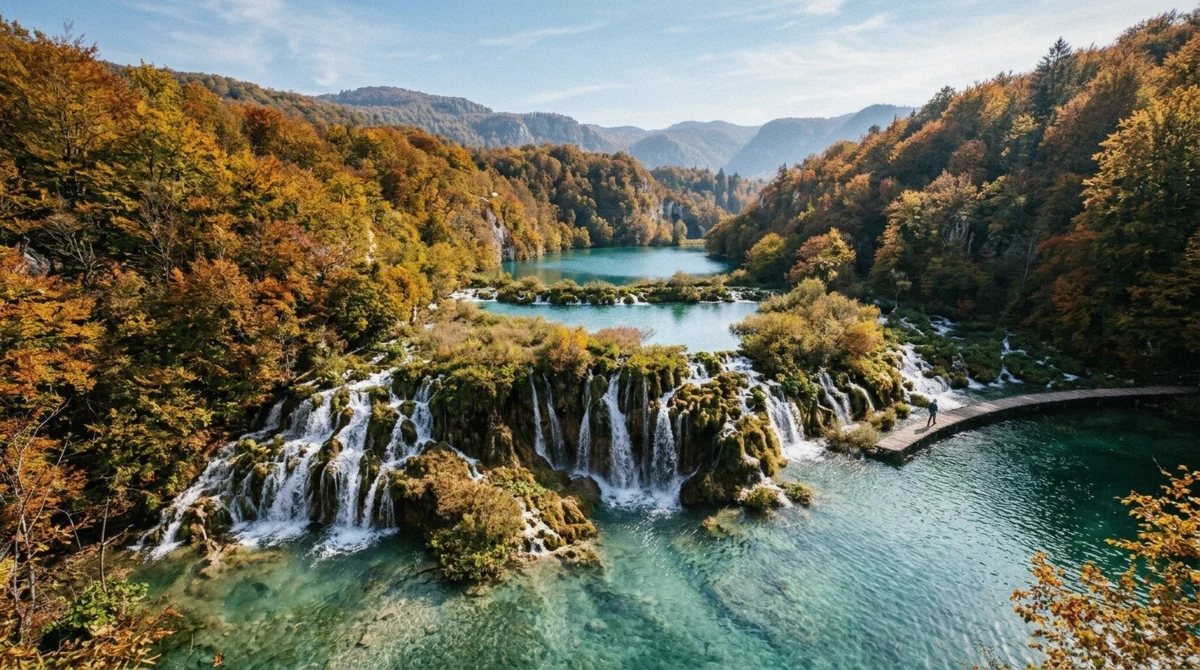
The best time to visit Plitvice Lakes is April to June, when snowmelt sends the most water over Veliki Slap and the crowds have not yet built to their August peak; late September into October is the close runner-up, with autumn colour in the beech forest and the cheaper €23 shoulder ticket. July and August are the window to avoid if you can, since they combine the highest ticket price with the thickest crowds on the boardwalks.
Quick answer
April through June is the strongest window to visit Plitvice Lakes, driven by spring snowmelt that puts the most water over the falls and crowds that have not yet reached their summer peak. Late September into October is the value runner-up, with autumn colour and the cheaper shoulder ticket. July and August, the busiest and most expensive months at €40 (about $46.30) for an adult ticket, are the window worth avoiding if your dates are flexible.
Key takeaways
- Best window: April to June, for the fullest waterfalls from snowmelt and lighter crowds than summer
- Runner-up: late September into October, cheaper €23 ticket and autumn colour, with a small trade-off in water flow
- Avoid if you can: July and August, the €40 peak-price months and the busiest boardwalks of the year
- Snow falls November to March and the lakes usually freeze in December and January, per the park's own climate data
- Compare the season against a fixed budget with the full ticket price table
- Spring departures like From Zagreb: Plitvice Lakes & Rastoke Guided Day Trip run through the strongest waterfall window
Tours That Run Well in the Best Months
These three cover the spring and shoulder-season window from three different starting cities, so wherever you are based, there is a departure that lines up.
 from $92
Best Seller · 3,459 reviews, 4.9★
from $92
Best Seller · 3,459 reviews, 4.9★ From Zagreb: Plitvice Lakes & Rastoke Guided Day Trip
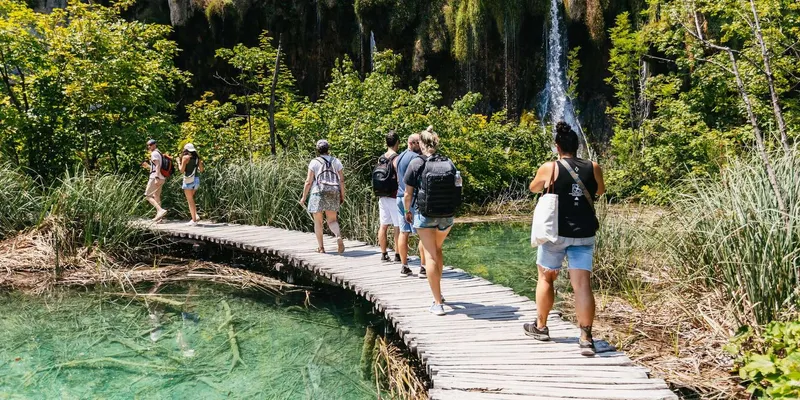
Combine UNESCO-listed Plitvice Lakes with the watermill village of Rastoke on a full-day trip from Zagreb. Entry tickets and a professional guide are included.
- Round-trip coach from Zagreb
- Plitvice Lakes + Rastoke watermill village
- Entry tickets and guide included
- Electric boat ride on Lake Kozjak
 from $51.43
4.9★ · 1,442 reviews
from $51.43
4.9★ · 1,442 reviews From Zadar: Plitvice Lakes Tour with Boat & Train
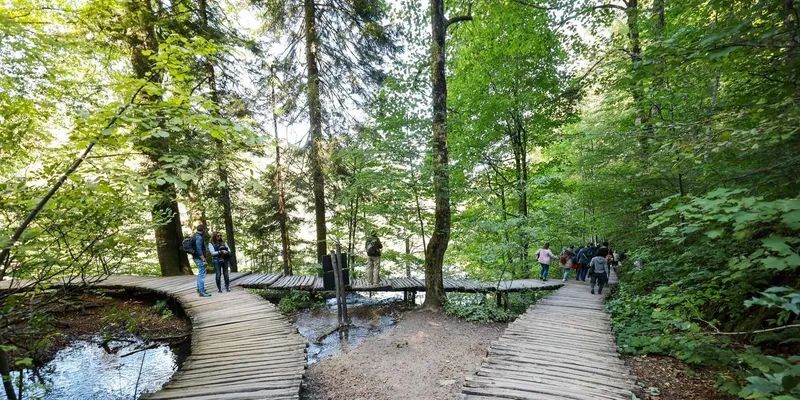
Discover Plitvice Lakes National Park on a day trip from Zadar with an electric boat ride and a panoramic train experience through the UNESCO-listed park.
- Round-trip transport from Zadar
- Electric boat ride on Lake Kozjak
- Panoramic park train included
- Entry tickets arranged for you
 from $101.71
4.9★ · 2,866 reviews
from $101.71
4.9★ · 2,866 reviews From Split: Plitvice Lakes Guided Tour with Entry Tickets
A full-day guided trip to Plitvice Lakes National Park from Split, with entry tickets included. Discover the 16 terraced lakes by electric boat and walk the boardwalks past…
- Round-trip coach from Split
- Skip-the-line entry tickets included
- Licensed guide through the lakes
- Electric boat ride on Lake Kozjak
The Short Answer on the Best Month
Why spring wins
The park's own climate figures give the reasoning away: average annual temperature 7.9°C (46°F), January averaging 2.2°C (36°F), and July and August averaging 17.4°C (63°F). Snowmelt in April and May sends the most water over Veliki Slap and the smaller cascades of any point in the year, which is the single biggest visual difference a visitor notices between a spring and a late-summer trip. By June the melt is tapering but the flow is still strong, and the summer crowd surge has not fully arrived.
According to the Croatian meteorological service, DHMZ (meteo.hr), spring and early summer in this part of Lika sees more changeable, showery weather than the drier peak of July and August, so pack for rain even on a sunny forecast.
The runner-up and the month to avoid
Late September into October is the value pick: the ticket drops to the €23 (about $26.60) shoulder-season price, the beech forest turns, and the boardwalks are noticeably quieter than August. The trade-off is a thinner Veliki Slap than the spring peak, since summer rainfall has usually eased by then.
July and August combine the €40 (about $46.30) peak adult ticket, converted at €1 = $1.1567, the European Central Bank reference rate of 14 August 2026, with the heaviest crowds of the year. Last verified: August 2026. It is not a bad time to visit, and plenty of people only have these months free, but if your dates are flexible, this is the window worth moving away from.
Season by Season at the Lakes
The month-by-month table
Every figure below comes from the park's own published climate and pricing data; where a month is not individually broken out by the park, the season's shared figures apply. Read the Verdict column as the honest one-line summary, not a ranking against every other month.
| Month | Conditions | Ticket price | Verdict |
|---|---|---|---|
| January | Cold, lakes usually frozen | €10 ($11.60) | Quiet, wintry, not for waterfalls |
| February | Cold, snow possible | €10 ($11.60) | Still quiet, still cold |
| March | Snow tapering, thaw begins | €10 ($11.60), rising to €23 on 1 Apr | Early shoulder, changeable |
| April | Snowmelt begins, falls filling | €23 ($26.60) | Strong pick, water rising |
| May | Peak snowmelt, fullest falls | €23 ($26.60) | Best overall for water volume |
| June | Warm, falls still strong, crowds building | €40 before 1 Jun cutoff; from 1 Jun €40/€25 late | Best overall, crowds not yet peak |
| July | Hot, busiest month | €40 daytime, €25 after 4pm | Avoid the midday crowds if possible |
| August | Hot, busiest month | €40 daytime, €25 after 4pm | Avoid, peak crowds and price |
| September | Warm, crowds easing | €40 until 30 Sep, €25 after 3pm | Good value with the late-entry trick |
| October | Autumn colour, falls easing | €23 ($26.60) | Strong value pick |
| November | Cold returns, snow possible | €10 ($11.60) | Quiet, cold, hospitality thinning |
| December | Lakes usually freeze | €10 ($11.60) | Quietest month, wintry scenery |
Reading the table
Prices shift with season under the park's own published tariff, and the live price on the ticketing portal is the number that governs; this table is a snapshot, not a live feed. Last verified: August 2026. The clearest read is the price bands themselves: €10 in the cold months, €23 in the two shoulder months either side of summer, and €40 across the four-month summer stretch, with the €25 late-entry discount available after the daily cutoff in June through September.
Temperatures and rainfall
The park does not publish a monthly breakdown of temperature or rainfall, only three headline figures: an annual average of 7.9°C (46°F), a January average of 2.2°C (36°F), and a July/August average of 17.4°C (63°F), with average annual precipitation of about 1,500 mm and average relative humidity of 81.8%. We are not going to invent numbers for the months in between; treat winter as consistently near the January figure, summer as consistently near the July/August figure, and spring and autumn as a gradual slope between the two. For a current forecast close to your travel dates, check the Croatian meteorological service at https://meteo.hr/, the national authority for Croatian weather data.
Spring, Summer, Autumn and Winter
Spring (April to June): the fullest waterfalls
This is the snowmelt window, and it is the single biggest reason Plitvice looks different in photos taken in May versus August. Veliki Slap and the smaller Prštavci cascades run at their heaviest, the forest is a fresh green, and the ticket price steps up gradually, from €23 in April and May to €40 once June begins. Book a week or so ahead rather than same-day, since this window is increasingly well known among repeat visitors. Departures like From Zagreb: Plitvice Lakes & Rastoke Guided Day Trip run through this whole stretch.
The honest trade-off: weather is genuinely changeable this early in the year, and a wet forecast is more likely than in high summer.
Summer (June to August): warm, busy, and the most expensive band
July and August average 17.4°C (63°F), the park's own hottest published figure, and this is also when the €40 peak ticket applies for most of the day. The upside is long daylight and the fullest range of tour departures running; the downside is genuinely crowded boardwalks in the late morning. The late-entry price after 4pm (3pm in September) is the best lever here, cutting the ticket to €25 while the light softens.
One honest trade-off worth naming: summer is also when hospitality inside the park is at its fullest capacity, so book transport and any overnight stay well ahead.
Autumn (September to October): the value season
September still runs on the summer tariff until the 30th, but the late-entry cutoff moves an hour earlier to 3pm and crowds visibly ease after the school-holiday rush. October drops to the €23 shoulder price and brings the beech forest's autumn colour, arguably the most photogenic single week of the year for anyone who prizes colour over waterfall volume. From Zadar: Plitvice Lakes Tour with Boat & Train runs comfortably through this window.
The trade-off: by October the summer rainfall has usually eased, so the falls run thinner than their May peak.
Winter (November to March): quiet and wintry, not a waterfall season
The park is open 365 days a year, and the €10 ticket is the cheapest of the year, but this is not the season to come for waterfall volume. Snow falls from November to March, and the lakes usually freeze over in December and January. The park is honest about the trade-off: during the colder months, most hospitality facilities inside the park close, with accommodation only at Hotel Jezero. From Split: Plitvice Lakes Guided Tour with Entry Tickets still runs through the shoulder edges of this window for anyone visiting in November or March.
The upside is real: near-empty boardwalks and a genuinely different, quieter park than any other season offers.
Best Season by Traveller Type
If you want the fullest waterfalls above all else
come in May, at the peak of snowmelt
If you are travelling with young kids
aim for June or late September, warm enough without August's peak heat and crowd density
If you are on a tight budget
travel November to March for the €10 ticket, accepting thinner falls and a frozen lake in December and January
If you want photographs over anything else
October for autumn colour, or May for the falls at full flow
If this is your first visit and you want the most forgiving conditions
June, before the July/August crowd peak but past the changeable spring weather
Waterfall Flow Through the Year
What actually drives it
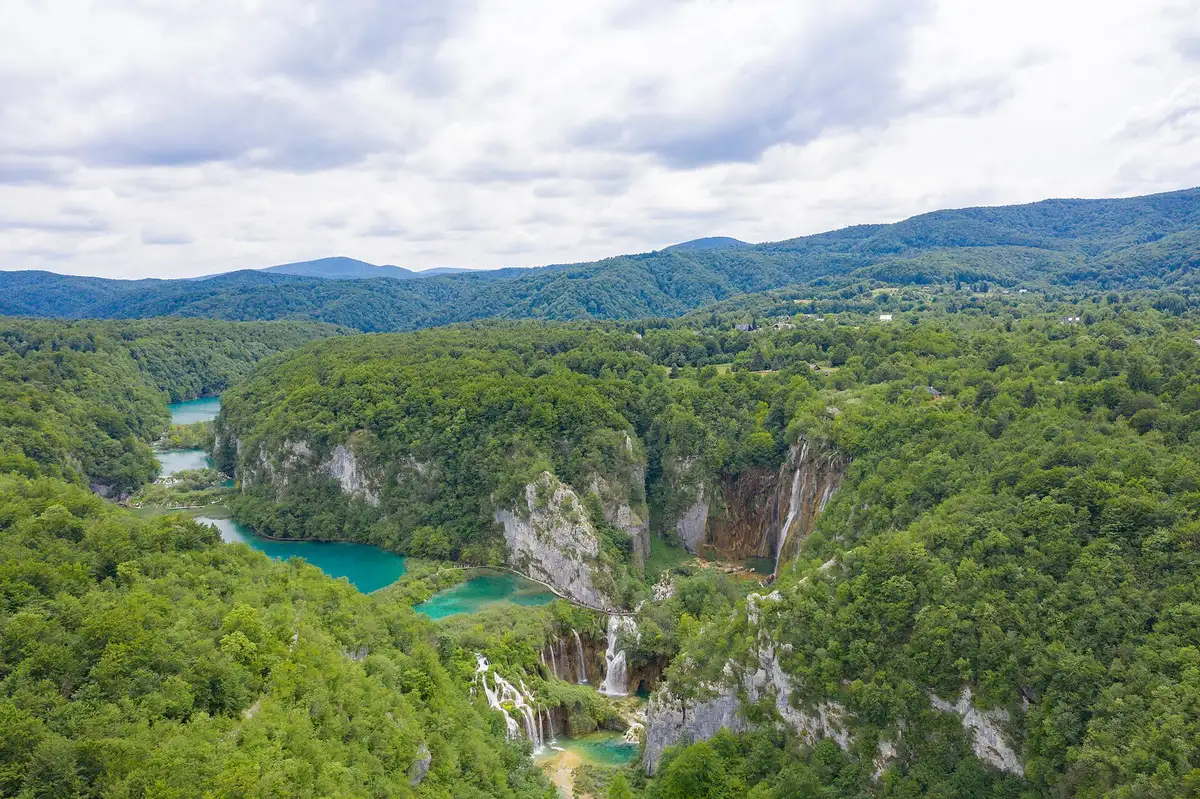
Most visitors assume rainfall on the day of their visit decides how full the falls look. It mostly does not. Plitvice's cascades are fed by the lake system's own water table, built up over the preceding weeks and months, and the single biggest driver is the spring snowmelt from the surrounding Mala Kapela and Lička Plješivica mountains draining into the lakes through April and May. A dry week during your actual visit barely dents a system that was full going into it; a dry spring going into summer is what genuinely thins the falls by August and September.
This is why late September and October, technically drier months day to day, are not necessarily worse for the falls than a rainy July day; the cumulative water table matters more than the forecast on your specific date.
Peak flow, off-peak flow
At peak flow, typically April through June, expect the full width of Veliki Slap running hard, spray reaching well back from the viewing platforms, and the smaller Prštavci and Sastavci cascades all clearly active. Off-peak, typically August through early autumn, expect a narrower, calmer Veliki Slap, individual channels of water more distinct rather than a single sheet, and some of the smallest seasonal cascades reduced to a trickle. Never expect a guaranteed specific flow on a specific date; conditions genuinely vary year to year.
Crowds and the Hour You Arrive
The pattern
Coach day trips from Zagreb, Zadar and Split all leave their home cities early and land at the park in a band roughly between 10am and 11am, since that is what the drive time dictates. That hour, not the season alone, is when the boardwalks are at their most crowded on any given day, June through September especially. The same pattern eases in the last two hours before closing, which is exactly the window the late-entry ticket discount rewards.
| Time of day | What it's like | Best for |
|---|---|---|
| Opening to 9:30am | Quietest window of the day | Photography, first-timers who want space |
| 10am–2pm | Busiest, coach groups arrive | Skip if you can; go early or late instead |
| 3pm onward (after cutoff) | Thinning out, late-entry discount applies | Budget-conscious visitors, softer light |
What Winter Really Looks Like
The honest picture
Snow falls from November through March, and the lakes usually freeze over in December and January, per the park's own published climate notes. The park stays open all year, but it says plainly that during the colder months most hospitality facilities close to visitors, with accommodation available only at Hotel Jezero. The park also warns that weather conditions can change rapidly, and individual trails may be temporarily closed or vehicles prohibited when they do; this applies most in winter.
We are not going to hand you a fixed date range for a winter shutdown of the boat or panoramic vehicle, because the park does not publish one. What we can tell you honestly: winter is the cheapest, quietest and least predictable season, worth it for the frozen-lake scenery if you go in prepared for reduced services and changeable trail access, not worth it if a full waterfall is the point of your trip.
How the Season Changes What You Pay
The three price bands
An adult one-day ticket runs €10 (about $11.60) from November to March, €23 (about $26.60) in April, May and October, and €40 (about $46.30) from June to September before the afternoon cutoff, converted at €1 = $1.1567, the European Central Bank reference rate of 14 August 2026. Last verified: August 2026. The full breakdown by visitor category, including the €25 late-entry rate and the two-day ticket, is on the dedicated ticket price page; this page only covers how the season drives that number, not every category.
What If the Weather Turns?
The short version
Light rain does not close the park; Plitvice's boardwalks and most routes run through a normal rainy day, just wetter underfoot. Real disruption happens when the park itself closes specific trails or suspends the boat or panoramic vehicle for safety, which it says can happen with fast-changing weather. If your own booked tour is cancelled for weather, the operator's own refund or reschedule policy applies, and it is worth reading that policy before you book rather than after.
If a spare morning is available on your trip, keep it free rather than scheduling Plitvice on your one and only travel day.
Picking Your Month by Traveller Type
So, when should you go?
April to June is the best overall window, driven by the fullest waterfalls of the year and crowds that build gradually rather than peak all at once. Late September into October is the budget-conscious runner-up, trading a somewhat thinner waterfall for a cheaper ticket and autumn colour. If your dates only allow July or August, it is still a good trip, just plan around the crowd pattern with an early or late-entry visit rather than a midday arrival.
Whichever season you land in, Plitvice Lakes tours by departure city run something close to year-round, so the choice is really about which month suits you, not whether a tour exists for it.
Frequently Asked Questions
What is the best month to visit Plitvice Lakes?
May, for the fullest waterfalls from spring snowmelt at the cheaper €23 shoulder-season ticket. June is a close second on scenery but crosses into the €40 summer price band.
Is Plitvice Lakes worth visiting in winter?
Yes, for a different reason than summer: near-empty boardwalks, frozen lakes in December and January, and the cheapest ticket of the year at €10. It is not the season for full waterfalls, and most in-park hospitality closes, with Hotel Jezero the exception.
When are the waterfalls fullest at Plitvice?
April and May, driven by snowmelt from the surrounding mountains feeding the lake system. The effect is cumulative rather than tied to the specific day's rainfall, so a dry week in May can still show fuller falls than a rainy day in September.
What time of day is quietest at Plitvice Lakes?
Before 9:30am and after 3pm, before the coach groups from Zagreb, Zadar and Split arrive around 10 to 11am and after most have left. See Entrance 1 or Entrance 2 for how the crowd pattern differs by gate.
Is Plitvice too crowded in August?
It is the busiest month of the year, combined with the €40 peak ticket price. It is not unworkable, especially with an early or late-entry visit, but if your dates are flexible, June or September deliver a similar experience with fewer people.
Does it snow at Plitvice Lakes?
Yes, from November through March, and the lakes usually freeze over in December and January. The park stays open all year through this period, with reduced hospitality and trails that can close temporarily in fast-changing weather.
How far in advance should I book a Plitvice tour?
A week or so ahead for the spring snowmelt window and the whole summer stretch, since both are popular; winter dates are easier to book closer to travel. From Zadar: Plitvice Lakes Tour with Boat & Train and similar departures fill faster in May and June than in the shoulder months.